Before the Violin
c. 1500–1607 · Northern Italy, especially Brescia and Cremona · Renaissance to early Baroque transition
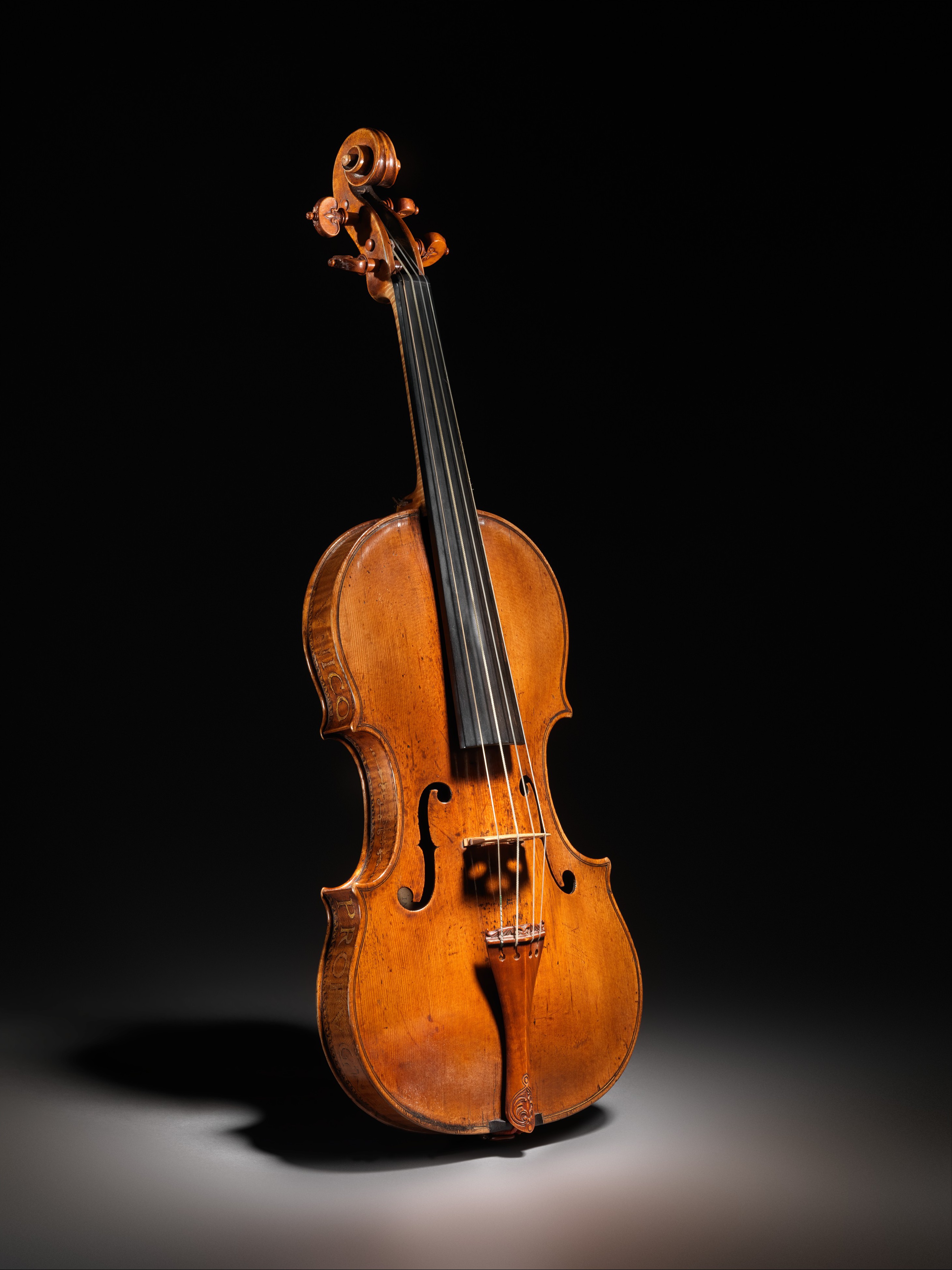
One of the oldest surviving violins, an Andrea Amati instrument made around 1560, would not look strange in a modern violin case. Its outline, arched body, f-holes, scroll, and four-string layout are already unmistakably violin. That is the first surprise in this story: the instrument appears in surviving evidence looking remarkably mature.
The second surprise in the violin's early history is that we cannot name the person who invented the instrument. Bowed strings had been evolving for centuries, the names used for them were inconsistent, and the earliest evidence comes from a mixture of paintings, written descriptions, and surviving instruments. The violin seems to have emerged in northern Italy during the first half of the sixteenth century, with Brescia and Cremona becoming especially important centers.
This lesson follows those clues. You will see what came before the violin, why historians avoid a single-inventor story, what early violinists actually did, and then hear two different windows into the young instrument before the great solo repertoire existed.
- School / tradition
- Early violin family / northern Italian tradition
- Primary city or region
- Northern Italy, especially Brescia and Cremona
- Active period
- Violin-like evidence by the 1530s; four-string violin documented by 1556
- Known for
- The violin appears in recognizable form first as a highly useful ensemble and dance instrument, before becoming a solo star