Arcangelo Corelli
1653–1713 · Rome, with roots in Bologna · Baroque / Italian violin tradition
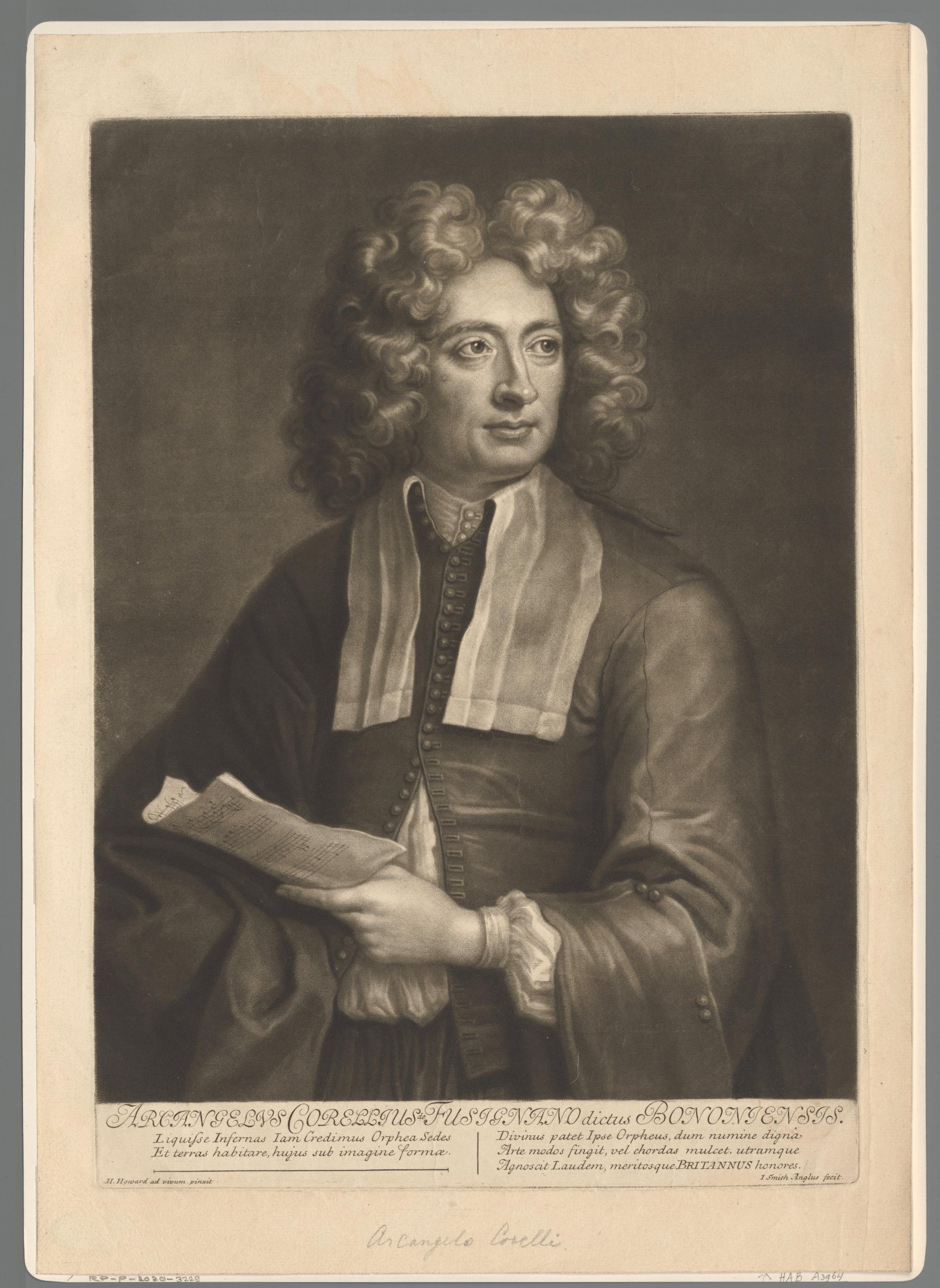
Lesson 2 ended with a violin world full of experiment. By the time Arcangelo Corelli built his career in Rome, composers already had decades of sonatas, multiple-string writing, unusual tunings, and new ways of setting a violin against continuo. Corelli’s importance came from doing something different: he brought unusual clarity and balance to that growing language.
Corelli was a violinist, composer, and ensemble leader. He published only six numbered collections, yet his music traveled far beyond Rome. His Op. 5 violin sonatas of 1700 were reprinted again and again, and his concerti grossi became models that other musicians studied, performed, and adapted.
This lesson follows how a style becomes a tradition. We will open Corelli’s printed music, hear the difference between a violin sonata and a , meet Torelli and Geminiani, and spend time with La Folia, one of the Baroque violin repertory’s most famous works, where a familiar musical framework is reshaped again and again.
- School / tradition
- Italian Baroque violin tradition
- Primary city or region
- Rome, with roots in Bologna
- Active period
- Late 1600s–early 1700s
- Known for
- Violin sonatas, concerti grossi, and a clear, balanced style that became a model across Europe.