Andrea Amati
c. 1505–1577 · Cremona, Italy · Early Cremonese tradition · foundational maker
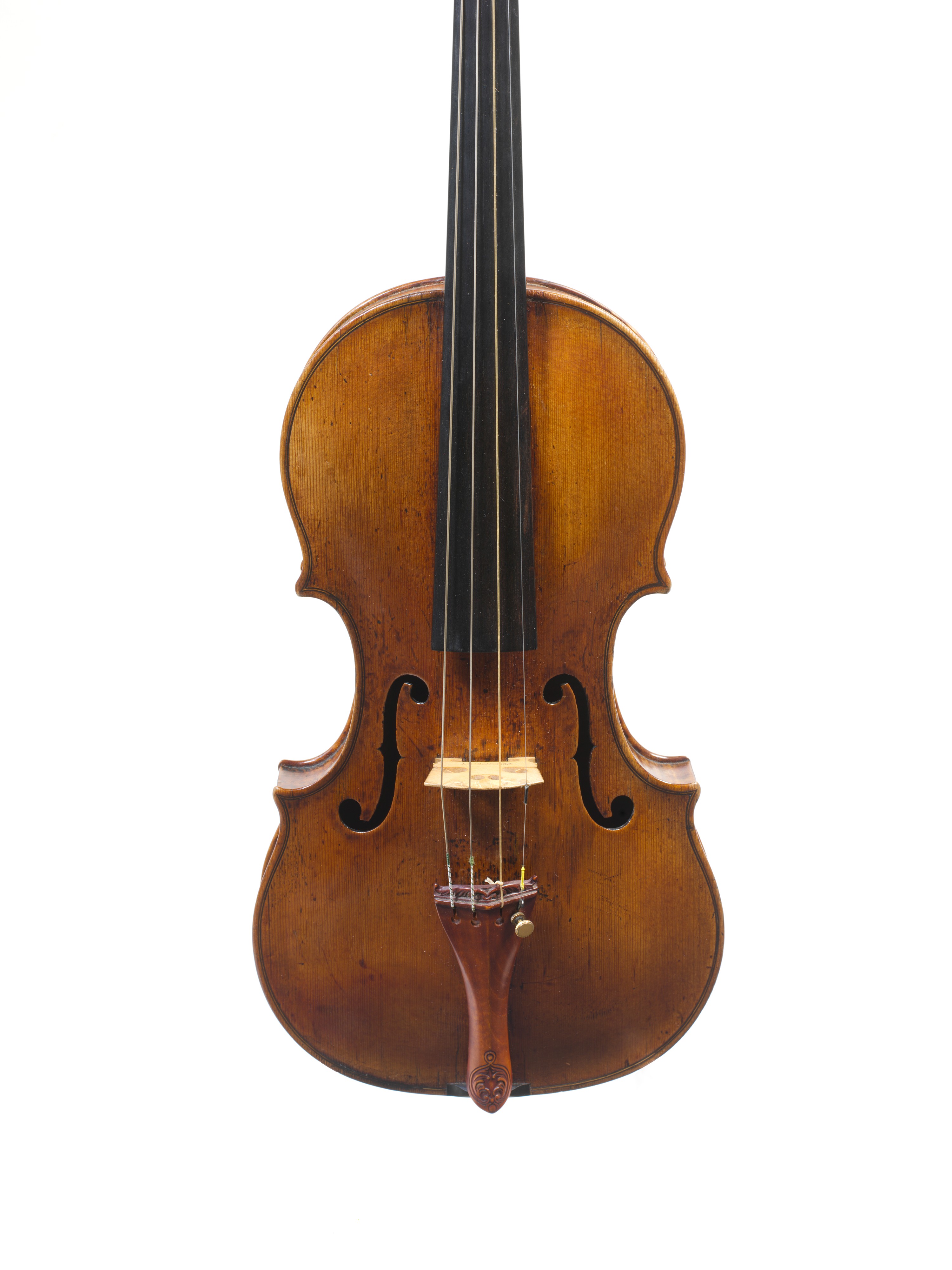
Andrea Amati is the best place to begin because his surviving work shows the violin family already taking a form that a modern player would immediately recognize. Bowed string instruments existed before him, and historians cannot point to one person and prove, “this individual invented the violin.” What can be said with much more confidence is that Amati established an extraordinarily successful Cremonese design and construction system.
The basic four-cornered outline, arched top and back, f-shaped sound holes, purfling, scroll, internal blocks and linings, and the familiar spruce-and-maple structure all appear in a mature and repeatable form in his work.
- School / tradition
- Early Cremonese / Amati family
- Primary city or region
- Cremona, Italy
- Active period
- Documented as an established maker by 1539; active until 1577
- Known for
- Establishing a mature, repeatable violin-family design that became foundational to the Cremonese tradition
That distinction matters. We are not beginning the course with a legend about a lone inventor suddenly creating a violin. We are beginning with the maker whose surviving instruments give us one of the clearest starting points for the violin as a standardized family of instruments. The Metropolitan Museum describes violin-family instruments as appearing in essentially modern form in northern Italy, particularly Brescia and , around the middle of the sixteenth century. Andrea was among the first generation of makers working in that transformation.
His influence also reaches far beyond his own workshop. His sons Antonio and Girolamo continued the family business, Girolamo’s son Nicolò became one of the most important teachers in violin-making history, and the Cremonese tradition eventually produced the Guarneri family and Antonio Stradivari. As we move through this course, many features will change, but we will repeatedly come back to design ideas already visible in Andrea Amati.
A useful word at the start of the course is . A luthier is a maker or repairer of stringed instruments. Historically the word is connected with lute making, but today it is commonly used for people who make or repair violins, violas, cellos, guitars and related instruments. In this course, “maker” and “luthier” will often be used interchangeably.